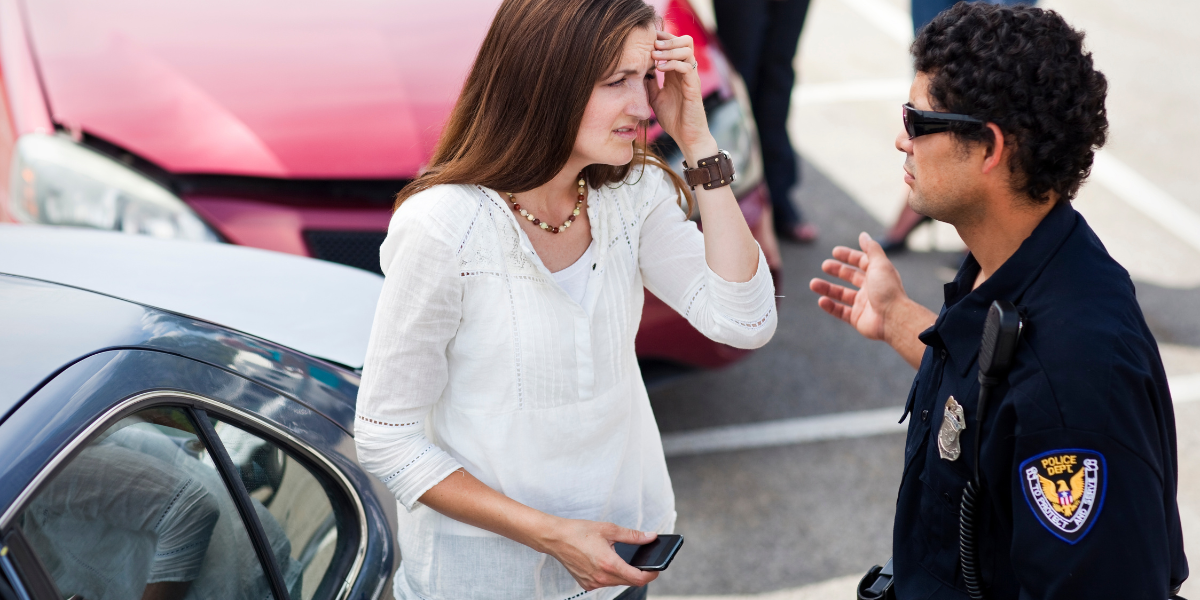
The immediate aftermath of a severe collision on I-565 is often a chaotic blur of flashing lights, ambulance sirens, and physical shock. You answer the responding officer’s questions as best as you can, hand over your insurance information, and eventually head to Huntsville Hospital to have your injuries evaluated. Weeks later, you finally receive a copy of your official traffic accident report from the Alabama Law Enforcement Agency. You read through the officer’s narrative, and your heart sinks. The document is completely inaccurate.
Discovering that an official record misrepresents what actually happened is incredibly frustrating. The report might place the blame squarely on your shoulders, misquote your statements, or completely ignore the reckless actions of the other driver. When you are already missing work and watching medical bills pile up, this kind of documentation error feels like a massive roadblock to your financial recovery.
Why Is an Accurate Police Report Vital for Alabama Car Accidents?
An accurate police report is vital because Alabama enforces pure contributory negligence. If the investigating officer incorrectly documents that you were even one percent at fault for the collision, the opposing insurance company will use that narrative to deny your financial recovery entirely. Every state handles shared fault differently, but Alabama operates under one of the strictest legal standards in the entire country.
The doctrine of pure contributory negligence creates an all-or-nothing scenario for injury victims. In most other states, if a jury decides you were slightly responsible for a crash, your financial award is simply reduced by your percentage of fault. Here, the law offers zero flexibility.
If the official record suggests you contributed to the collision in any capacity, the opposing insurance adjuster gains an enormous advantage. They will weaponize that single sentence in the officer’s narrative. The adjuster will immediately issue a formal denial of liability, claiming they owe you absolutely nothing for your property damage, your emergency room visits, or your lost wages.
Insurance companies are highly profitable entities that actively look for reasons to protect their bottom line. They rely heavily on the initial police report to make rapid determinations about fault before you have a chance to secure legal representation. When the report inaccurately suggests you failed to yield, drifted out of your lane, or braked too suddenly, it hands the insurance carrier the exact excuse they need to close your file without issuing a settlement check. Correcting these errors early removes this leverage and forces the carrier to evaluate the claim based on reality.
Can a Police Crash Report Be Used as Evidence in Court?
Generally, police crash reports are considered hearsay and are inadmissible as direct evidence of fault during an Alabama civil trial. However, insurance adjusters rely heavily on these initial documents during the pre-litigation settlement phase to establish liability and value the claim.
Many injury victims panic when they see an inaccurate crash report because they assume a judge and jury will eventually read it and rule against them. It is highly reassuring to learn that under state evidentiary rules, the actual accident report is typically excluded from a formal civil trial. Courts recognize that responding officers rarely witness the collisions they investigate. Their reports are simply compilations of post-crash observations and statements from highly stressed individuals.
Because the officer did not see the crash happen, their written conclusion about who caused the accident is technically considered hearsay. If your case eventually goes to trial at the Madison County Courthouse, the jury will likely never see the physical report. Instead, they will hear direct testimony from you, the other driver, eyewitnesses, and accident reconstruction professionals.
While the report holds very little weight in a courtroom, it reigns supreme during the initial insurance claims process. The vast majority of personal injury cases resolve long before a lawsuit is ever filed. During these early stages, the insurance adjuster treats the police report as the definitive truth. If you want to secure a fair settlement without enduring a lengthy court battle, you must address the inaccuracies in the document directly.
How Do Factual Errors Differ from Disputed Fault?
Factual errors involve objective mistakes, such as misspelling a driver’s name, citing the wrong intersection, or recording incorrect vehicle models. Disputed fault involves the officer’s subjective conclusion about how the crash occurred, which requires substantial contradictory evidence to challenge and amend. When reviewing your document, you must determine whether you are dealing with a simple administrative mistake or a complex disagreement over liability. Factual errors are relatively common and straightforward to fix.
A responding officer might accidentally write down that the crash happened at the intersection of Jordan Lane and University Drive, when it actually occurred a block away. They might misspell your last name, transpose the numbers on your license plate, or record the wrong insurance policy number. Because these are objective facts, police departments are usually highly cooperative about fixing them. You simply provide the correct information, and the records department updates the file.
Disputed fault is a completely different challenge. This occurs when you fundamentally disagree with the officer’s narrative of events. For example, the officer might state that you rear-ended the other vehicle because you were distracted, while you know for a fact that the other driver aggressively cut you off and slammed on their brakes. Changing a subjective conclusion requires you to prove that the officer’s initial assessment was fundamentally flawed. You cannot just call the precinct and ask them to change their minds. You have to bring undeniable proof.
How Can I Request a Correction to My Alabama Traffic Accident Report?
To request a correction, you must contact the specific investigating officer or their precinct directly. You should politely present objective, verifiable evidence that clearly proves a material fact was recorded incorrectly in the initial document before they submit the final version.
The process of fixing an error begins with identifying exactly who wrote the document. Look at the top or bottom corners of your copy to find the responding officer’s name, badge number, and designated agency. An officer with the Huntsville Police Department handles their paperwork differently than an Alabama State Trooper.
Once you identify the agency, call their non-emergency number and ask to speak directly with the officer who investigated your crash. If they are unavailable, leave a polite message requesting a callback regarding a factual correction on a recent report. Do not call with an angry or confrontational tone. Officers handle dozens of accidents every week, and mistakes happen naturally in high-pressure environments. Approaching the conversation respectfully greatly increases your chances of securing their cooperation.
When you connect with the officer, clearly and calmly explain the error. If it is a simple factual mistake, they will often pull up the file, verify your information, and make the adjustment in their system. If you are disputing the narrative, ask the officer if they would be willing to review new evidence that was not available at the scene. Request an email address or a physical location where you can submit your supporting documentation for their review.
What Evidence Is Needed to Amend an Incorrect Police Report?
Amending a police report requires compelling, objective proof rather than simply disagreeing with the officer’s conclusion. Effective evidence includes clear photographs of the vehicle damage, verified data from the car’s event data recorder, traffic camera footage, and sworn statements from independent witnesses.
If you want an officer to alter their official findings, your word alone will never be enough. You must provide independent, third-party verification that contradicts the original narrative. The most effective types of evidence include:
- Video Footage: A clear video is the most powerful tool for changing a liability determination. If you have time-stamped dashcam footage showing your vehicle’s speed and position, provide it immediately. Similarly, footage from nearby commercial security cameras can definitively prove who had the right of way.
- Independent Witness Statements: If bystanders saw the crash but left before the police arrived, their testimony can change the outcome. A written statement from someone who does not know you and has no financial stake in the collision carries immense weight.
- Event Data Recorder Information: Modern vehicles are equipped with black boxes that record speed, braking patterns, and steering inputs in the seconds leading up to a crash. Extracting this data can prove that you were completely stopped when the impact occurred.
- Physical Scene Evidence: Clear photographs of skid marks, fluid spills, and the exact resting positions of the vehicles can help an officer realize their initial mental model of the crash was incorrect.
- Medical Documentation: Sometimes, the specific nature of your injuries can prove the angle of impact. Records from North Alabama Medical Center detailing your physical trauma can occasionally be used by reconstruction professionals to verify the collision dynamics.
What Happens if the Investigating Officer Refuses to Change the Report?
If the investigating officer refuses to change the original report, you can request to file a formal supplemental report containing your statement. While this does not overwrite the officer’s initial narrative, it ensures your version of the events becomes a permanent part of the official record. It is entirely possible that even after you present a compelling argument and solid evidence, the investigating officer will stand by their original conclusion. Police departments often have strict internal policies regarding how and when official documents can be altered after they are filed. If the officer declines your request to rewrite the narrative, you have not lost the battle.
Your next step is to request the addition of a supplemental report. This is a secondary document attached directly to the main file. You can draft a highly detailed, factual statement explaining exactly how the crash occurred and highlighting the specific errors in the officer’s initial assessment. Filing a supplement ensures that anyone who requests the crash data in the future, most notably the opposing insurance adjuster, must read your version of events alongside the officer’s version. While it does not erase the initial mistake, it formally documents your disagreement and puts the insurance company on notice that liability is actively disputed.
This prevents the adjuster from claiming they were entirely unaware of your perspective when they attempted to deny the claim.
How Does an Attorney Handle an Incorrect Crash Report During Negotiations?
When a crash report is incorrect, an attorney overrides the document’s influence by presenting an independent liability investigation to the insurance adjuster. By compiling overwhelming evidence, taking witness depositions, and hiring accident reconstruction professionals, your legal team forces the carrier to look past the flawed initial report. When an insurance carrier refuses to negotiate fairly because of a bad police narrative, a skilled legal team completely shifts the dynamic of the case. We do not rely on the responding officer to do our job for us. Instead, we conduct a comprehensive, independent investigation from the ground up.
While you are focusing on recovering from your injuries, your legal representation is actively gathering the evidence the police missed. We send preservation letters to local businesses to secure security footage before it is deleted. We track down witnesses who were mentioned at the scene but never formally interviewed. We also partner with professional accident reconstruction engineers who can analyze the vehicle damage and mathematically prove exactly how the collision occurred.
Once we compile this overwhelming body of evidence, we present it to the insurance carrier in a comprehensive demand package. We explicitly demonstrate how the police report is factually flawed and remind the adjuster that the report will be inadmissible if the case proceeds to the Lauderdale County Courthouse. When faced with undeniable independent evidence and the threat of litigation, adjusters routinely back down and offer fair compensation, regardless of what the initial police paperwork says.
Why Should I Avoid Arguing with the Police Officer at the Crash Scene?
Arguing with a police officer at the crash scene while adrenaline is high can severely damage your credibility and result in antagonistic notes in the official narrative. It is always better to remain calm, seek immediate medical attention, and address any reporting errors through formal channels later. When you are standing on the side of a busy highway next to your severely damaged vehicle, your adrenaline is surging. If you hear the other driver lying to the police, or if you feel the officer is completely misunderstanding the situation, your first instinct is to argue loudly and aggressively defend yourself. You must resist this urge completely.
Combative behavior at the scene of an accident rarely results in the officer taking your side. Instead, it often leads to the officer viewing you as uncooperative, hostile, or unreliable. They may note your aggressive demeanor in the report, which insurance adjusters will later use to paint you as an erratic driver.
Your priority at the scene is your physical health. Answer the officer’s direct questions calmly, stick to the basic facts without speculating, and never apologize or admit any degree of fault. If the officer writes down the wrong information, let it go for the moment. It is vastly more effective to challenge a bad report days later from the safety of your home, with objective evidence in hand, than to yell at a public servant on the side of the road.
Protect Your Rights with Hodges Trial Lawyers
The weeks following a major collision are physically draining and emotionally exhausting. The experienced legal team at Hodges Trial Lawyers represents injury victims across Huntsville, Florence, and the greater North Alabama region. We are dedicated to exposing insurance delay tactics, protecting you from the traps of contributory negligence, and securing the financial recovery you need to repair your vehicle and pay your medical bills. We handle personal injury cases on a strict contingency fee basis, which means you pay absolutely no attorney fees unless we successfully win your case or secure a settlement on your behalf.
Contact our office today to schedule a free, confidential consultation.
Frequently Asked Questions
Does an amended police report guarantee an insurance settlement?
No, an amended report does not guarantee a financial payout. While a corrected narrative removes a major obstacle and significantly strengthens your negotiating position, the insurance company will still conduct its own investigation and look for other reasons to minimize or deny your claim.
How long do I have to request a change to my crash report?
You should request a correction as soon as you discover the error, ideally within a few weeks of the collision. Waiting several months makes it much harder to convince the investigating officer to alter their findings, as their memory of the scene will have completely faded.
Will the insurance company automatically see the updated report?
Do not assume the insurance adjuster will actively look for an updated version of the document. Once your legal team successfully amends the file or adds a supplemental statement, they will formally submit the new documentation directly to the assigned adjuster to ensure it is added to your active claim file.
Can I sue the police department for making a mistake on the report?
You generally cannot sue a police department or an individual officer simply for making a factual error or reaching an incorrect conclusion on a crash narrative. Law enforcement officers are protected by qualified immunity for actions performed during their standard official duties.
How do I obtain a copy of my official Alabama accident report?
You can request a copy of your official crash documentation directly from the local precinct that responded to the scene, or you can order it online through the Alabama Law Enforcement Agency portal. Your legal representation will typically handle this process for you as part of their initial evidence gathering.