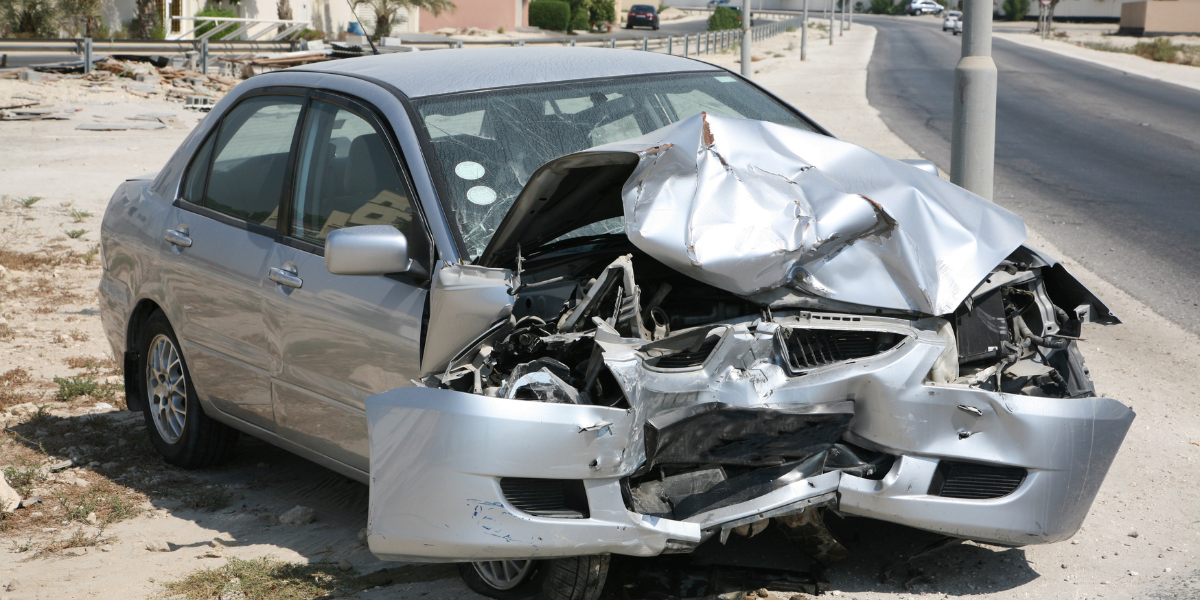
It happens in an instant. Traffic on I-565 in Huntsville suddenly slows as drivers merge toward Research Park or the Memorial Parkway exits. A few miles away on the Beltline in Decatur, or along busy Highway 72 through Florence and Athens, the same story unfolds — a moment’s distraction, a quick glance down, and the red glow of brake lights fills the windshield. The first impact hits hard, followed by a sickening chain of collisions — the chaotic sound of metal, glass, and momentum colliding. When the dust settles, after making sure everyone’s safe, one question looms largest: who’s at fault?
Untangling the web of liability in a multi-vehicle pileup is one of the most challenging aspects of personal injury law in Alabama. It is far more complex than a typical two-car collision.
What Defines a Chain Reaction Car Crash?
A chain reaction accident, often called a multi-vehicle pileup, involves three or more vehicles crashing in a sequence. This is not just one accident, but a series of impacts that are causally linked. The classic “domino effect” is a common example, where one rear-end collision forces the car that was struck into the vehicle in front of it, and so on.
These incidents frequently occur in situations with high traffic density or sudden changes in speed, such as:
- Interstate highways during rush hour.
- Construction zones with lane closures.
- Areas with poor visibility due to fog, heavy rain, or sun glare.
- Stretches of road where sudden stops are common due to traffic signals or intersections.
Unlike a simple fender-bender, the physics and legal arguments in a pileup are magnified. Each driver may have a different perspective on what happened, and physical evidence can be difficult to interpret without a trained eye.
Why is Establishing Fault So Difficult in These Cases?
Determining liability in a multi-car collision is notoriously complicated for several reasons. Insurance companies for each involved driver will launch their own investigations, each with the goal of minimizing their own financial exposure. This creates an environment where blame is constantly being shifted.
Key challenges include:
- Conflicting Testimonies: Every driver involved has a vested interest in presenting a version of events that absolves them of responsibility. Memories can be flawed, especially after a traumatic event, leading to sincere but contradictory statements.
- Multiple Points of Impact: A single vehicle may be hit from the rear and subsequently pushed into the car ahead. Analyzing the damage to determine the force and sequence of each impact requires significant technical knowledge.
- Chaotic Evidence: The accident scene is often a mess of debris, skid marks, and vehicles that may have been moved after the initial impacts. Preserving and correctly interpreting this evidence is a formidable task.
- Multiple Insurers: Instead of dealing with one insurance adjuster, you may be contacted by several. Each adjuster is working for their own company, not for you, and their primary goal is to attribute fault to another party.
Common Scenarios and Initial Fault Presumptions
While every accident is unique, most chain reaction crashes fall into a few common patterns. In Alabama, there are general presumptions of fault, but it is important to remember that these can be challenged with sufficient evidence.
- The “Sandwich” Collision: This is one of the most frequent types of pileups. Driver A is stopped in traffic. Driver B stops safely behind Driver A. Driver C, failing to stop in time, slams into the back of Driver B. The force of this collision propels Driver B’s vehicle into the back of Driver A’s vehicle. In this scenario, the presumption is strong that Driver C is 100% at fault for all resulting damage and injuries. Driver B had no control over being pushed into Driver A.
- The Middle-Car Initiator: This situation is more complex. Let’s say Driver B fails to stop and rear-ends Driver A. A moment later, Driver C rear-ends the now-stopped Driver B. In this case, there are two separate impacts caused by two different negligent acts. Driver B would likely be held liable for the damages to Driver A, and Driver C would be liable for the damages to Driver B. Things become even more complicated if a passenger in Driver B’s car is injured, as they may have a claim against both Driver B and Driver C.
- Multiple Rear-End Collisions: If traffic stops suddenly and a series of individual rear-end collisions occur down the line, each striking driver is generally presumed to be at fault for hitting the car directly in front of them. The legal theory is that each driver failed to maintain a safe following distance to allow for sudden stops.
The Single Most Important Factor: Alabama’s Rule of Contributory Negligence
This is where an Alabama car accident claim becomes fundamentally different from claims in almost any other state. Alabama is one of the very few states that still adheres to the harsh legal doctrine of pure contributory negligence.
What does this mean for you?
If you are found to be even 1% at fault for the accident that caused your injuries, you are completely barred from recovering any financial compensation from the other at-fault drivers.
This rule has a massive impact on chain reaction accident cases. Insurance adjusters are highly skilled at investigating accidents to find any small piece of evidence that could assign a tiny percentage of blame to you. They might argue that you:
- Stopped too abruptly.
- Had a brake light that was not functioning.
- Were distracted for a moment before the impact.
- Made an unnecessary lane change just before the pileup.
If they can convince a judge or jury that you contributed to the accident in any way, no matter how minor, your claim can be denied entirely. This all-or-nothing system makes building a meticulous, evidence-based case absolutely essential.
Challenging the Presumption of Fault
The driver who causes a rear-end collision is not automatically at fault. The presumption that the trailing car is liable can be overcome with evidence demonstrating that another party’s negligence was the true cause of the crash.
A driver might successfully rebut the presumption of fault by proving:
- The Sudden Stop Doctrine: If the lead driver slammed on their brakes for no legitimate reason, creating a hazard that was impossible to avoid.
- Malfunctioning Equipment: The car in front had defective or non-operational brake lights, making it impossible for trailing drivers to know it was stopping.
- A “Phantom Vehicle”: A third, uninvolved vehicle cut someone off or swerved into their lane, forcing them to brake suddenly and initiating the chain reaction.
- Unsafe Lane Change: Another driver abruptly and unsafely moved into the path of traffic, leaving no room for others to react.
Proving these defenses requires more than just a driver’s word; it requires compelling evidence that shifts the narrative of how the accident unfolded.
The Evidence Needed to Build a Strong Claim
Because of the contributory negligence rule and the finger-pointing that occurs in multi-car pileups, a successful claim depends entirely on the quality and strength of the evidence.
Key pieces of evidence that can prove liability include:
- The Official Police Report: This is the first piece of evidence an insurer will look at. It contains the officer’s initial observations, diagrams of the scene, and statements from drivers and witnesses. However, in a chaotic pileup, these reports can contain errors or be based on incomplete information.
- Witness Statements: Independent witnesses with no stake in the outcome can provide invaluable, objective accounts of the sequence of events.
- Photographs and Video Footage: Nothing tells the story like visual evidence. Photos of all vehicles, their final resting positions, damage points, skid marks, and the surrounding environment are vital. Dashcam footage from involved vehicles or surveillance video from nearby businesses can be definitive proof.
- Accident Reconstruction Professionals: In serious cases, it may be necessary to hire an accident reconstructionist. These professionals use physics, engineering, and specialized software to analyze the evidence and scientifically determine the sequence of impacts, vehicle speeds, and other critical factors.
- Event Data Recorder (EDR) Information: Most modern vehicles contain an EDR, or “black box,” that records data in the seconds before and during a crash. This data can include vehicle speed, brake application, steering angle, and force of impact. Securing and interpreting this data can conclusively establish what a driver was doing just before the collision.
Dealing with Multiple Insurance Companies
After a pileup, your phone may start ringing with calls from adjusters representing every other driver involved. It is important to be extremely cautious in these conversations. Each adjuster has a single objective: to protect their company’s financial interests. They will often work together to build a consensus that points blame away from their own clients.
Politely decline to give a recorded statement to any insurance company other than your own. These statements are not for your benefit. They are designed to find inconsistencies in your story or to get you to say something that can be interpreted as an admission of partial fault, which, under Alabama law, would be fatal to your injury claim.
What Compensation Can Be Pursued in a Multi-Vehicle Accident Claim?
If you can successfully prove that another driver or multiple drivers were entirely at fault for your injuries, you are entitled to seek compensation for all of your losses. This compensation, called damages, is typically broken down into two categories.
Economic Damages: These are the tangible financial losses that can be calculated and proven with bills and receipts.
- All past, current, and future medical bills (hospital stays, surgeries, physical therapy, medication).
- Lost wages from time you were unable to work.
- Loss of future earning capacity if your injuries cause a permanent disability.
- The cost to repair or replace your vehicle.
Non-Economic Damages: These are the intangible losses that compensate you for the human cost of the accident.
- Physical pain and suffering.
- Mental anguish and emotional distress (including anxiety or PTSD).
- Loss of enjoyment of life if your injuries prevent you from participating in hobbies and activities you once loved.
- Permanent scarring or disfigurement.
Calculating the full value of these damages, especially projecting future costs and assigning a monetary value to pain and suffering, requires a thorough assessment of your case.
Do Not Let the Insurance Companies Dictate the Outcome
The aftermath of a chain reaction crash is disorienting and stressful. It is easy to feel pressured by insurance adjusters who are pushing for a quick statement or a lowball settlement offer. Remember that their initial assessments and offers are designed to resolve the claim for as little as possible. The complexity of the evidence and the unforgiving nature of Alabama’s contributory negligence law make these cases exceptionally difficult to handle on your own. You need a clear strategy based on hard evidence to overcome the insurance companies’ tactics.
Contact Hodges Trial Lawyers for a Clear Path Forward
If you have been injured in a multi-vehicle pileup in Alabama, you do not have to face the complexities of the legal process alone. The legal team at Hodges Trial Lawyers is dedicated to helping injured people hold negligent parties accountable. We have the resources and determination to conduct in-depth investigations, consult with leading accident reconstruction professionals, and build a powerful case designed to counter the arguments of multiple insurance companies.
You should not have to bear the financial and physical burden of a car crash someone else caused. Contact us today at 256-826-4129 for a free, no-obligation consultation to discuss your case. We can help you find a clear path forward and fight for the full compensation you deserve.